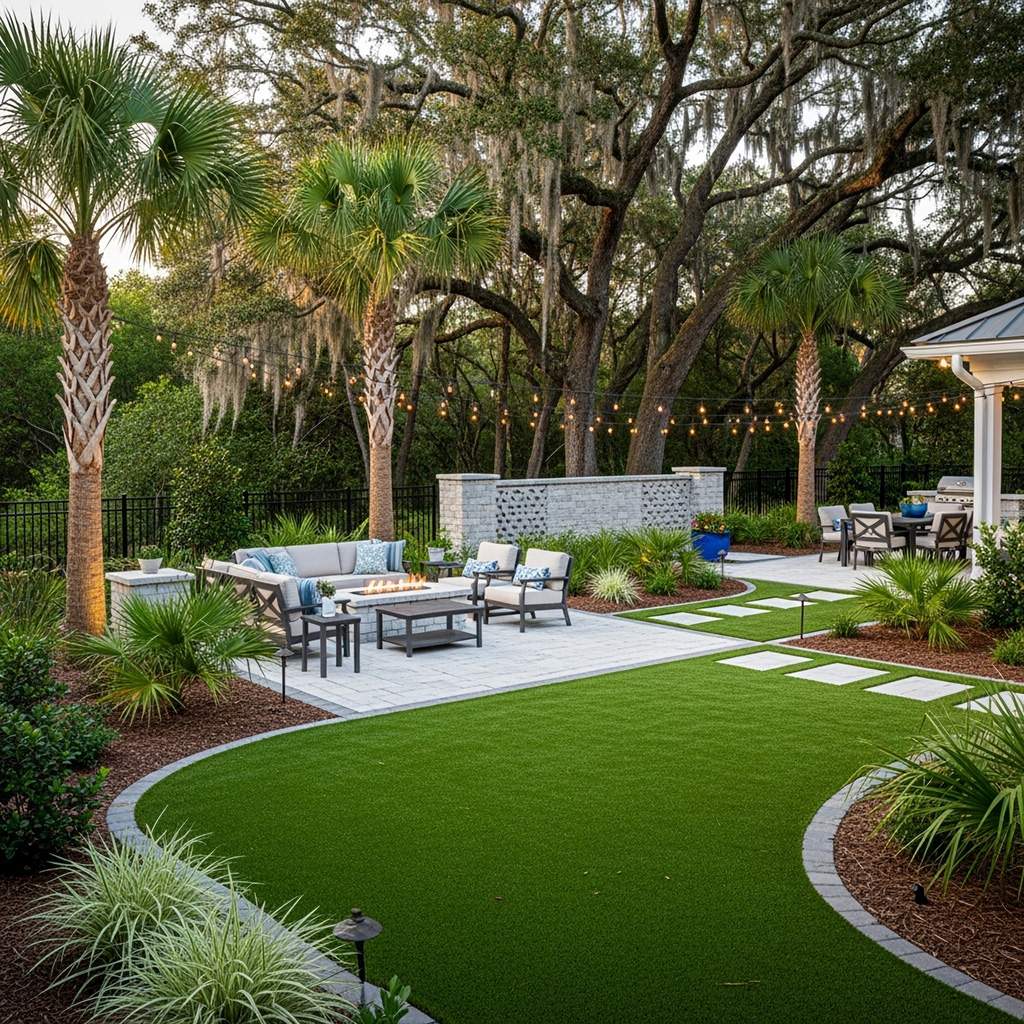
Charleston’s mild winters, warm evenings, and love of gathering outdoors make it one of the best places in the country to invest in an outdoor kitchen. Whether you’re hosting a low-country boil in Mount Pleasant, entertaining friends on a Daniel Island patio, or simply want somewhere to grill without running back and forth to the house on James Island, an outdoor kitchen turns your backyard into the room you’ll actually live in for eight or nine months of the year.
At Sweetgrass Concepts, custom outdoor kitchens and fire pits are some of the most rewarding projects we build, because they change how a family uses their entire property. Here’s what Charleston homeowners should know before designing one, from layout ideas to realistic costs to the Lowcountry- specific details that make a project last.
Why Charleston Homeowners Are Investing in Outdoor Kitchens
Charleston’s climate is a big part of the appeal. With a long, warm season that stretches from March through November, an outdoor kitchen gets far more use here than it would in a place with a short summer. Outdoor entertaining is also woven into Lowcountry culture, from oyster roasts to backyard boils, which makes a built-in grilling and prep space a natural extension of how people already gather. On top of the lifestyle benefits, a well-designed outdoor kitchen is one of the highest-value additions you can make to a Charleston property, both for your own enjoyment and for resale.
Outdoor Kitchen Design Ideas for Lowcountry Backyards
Covered kitchens. Given Charleston’s intense sun and frequent summer showers, a covered outdoor kitchen, whether under a pergola, pavilion, or roof extension, is one of the most requested features we build. It keeps appliances protected and lets you keep cooking even when an afternoon thunderstorm rolls through, which happens often between June and September.
L-shaped and U-shaped layouts. These configurations work well for larger properties in Mount Pleasant, Daniel Island, and Johns Island, giving you separate zones for grilling, prep, and seating.
Compact galley kitchens. For smaller lots on James Island, Folly Beach, or in West Ashley, a single-run galley layout along an existing patio or deck can deliver a full outdoor kitchen experience without requiring a major footprint expansion.
Fire pits and fireplaces paired with the kitchen. A fire pit extends your outdoor season into Charleston’s mild winters and creates a natural gathering spot separate from the cooking area. Gas fire pits offer instant on-off convenience, while wood-burning options bring a more traditional feel for evenings on Sullivan’s Island or Isle of Palms.
Bar seating and entertaining space. An extended bar top with stools turns a grilling station into a true entertaining hub, ideal for game days or hosting friends after a day on the water.
Outdoor Kitchen Cost Guide for 2026
Outdoor kitchen pricing varies widely based on size, materials, and appliance selection, but here’s a general breakdown to help you budget:
- Pre-built or modular kitchens typically run $7,000–$16,000 installed, a good option for homeowners who want a finished look without a fully custom design.
- Mid-size custom kitchens generally fall between $10,000–$20,000, which covers a solid island with a built-in grill, some counter space, and basic storage, a common choice for Mount Pleasant and James Island backyards.
- Large or fully custom kitchens run $20,000–$35,000 and often include multiple appliances, extended counter space, and a covered structure.
- Luxury outdoor kitchens with premium stone, high-end appliances, wine coolers, pizza ovens, and full roof structures can exceed $35,000–$65,000.
A few cost drivers to keep in mind: appliances typically make up 40–50% of your total budget, countertops range from $40–$200 per square foot depending on material, and built-in grills alone can run anywhere from $3,000–$20,000 for a quality unit. Utility work, like running gas lines, electrical, or plumbing to your outdoor kitchen, adds cost but is well worth it for a fully functional space.
Because every property and design is different, the best way to get an accurate number is a free, on-site estimate where we can walk your space and talk through your priorities.
Lowcountry-Specific Considerations for Outdoor Kitchens
Building an outdoor kitchen in Charleston isn’t quite the same as building one inland, and a few local factors make a real difference in how long your investment lasts.
Salt air and corrosion. For homes near the coast, on Sullivan’s Island, Isle of Palms, or Folly Beach, salt air can corrode lower-grade stainless steel appliances over time. We recommend marine-grade or 304- grade stainless steel appliances and hardware for coastal properties, even though they cost more upfront.
Humidity and material selection. Charleston’s humidity makes some materials, like untreated wood, more prone to warping, mold, and mildew. Stone, concrete, and properly sealed masonry hold up far better and require less maintenance over time.
Drainage and site prep. Just like a patio, an outdoor kitchen needs a solid, well-drained foundation. The Lowcountry’s sandy soil and high water table mean proper grading and a compacted base are essential to prevent shifting or settling.
Hurricane season. Outdoor kitchens should be built with storm season in mind. This means securing structures appropriately, choosing durable materials, and, in some cases, planning for how to protect appliances during a major storm.
Shade and sun exposure. Charleston summers get hot, and a kitchen with no shade can be uncomfortable to use during peak afternoon hours. Incorporating a pergola, roof, or strategically placed shade trees makes the space usable more hours of the day.
Fire Pits: A Popular Add-On
Many of our outdoor kitchen clients in Charleston, Mount Pleasant, and Daniel Island pair their build with a custom fire pit. Beyond extending your outdoor season into the cooler months, a fire pit creates a second gathering zone, so guests aren’t all clustered around the grill. Options range from simple gas fire pits built into a paver patio to full stone fireplaces that become a focal point of the backyard.
Planning Your Outdoor Kitchen: A Few Questions to Ask Yourself
Before you meet with a contractor, it helps to think through:
- How often do you realistically entertain, and for how many people?
- Do you want a fully enclosed, covered structure, or an open-air layout?
- What’s your must-have appliance list, grill, side burner, sink, fridge, pizza oven?
- Is this a standalone project, or part of a larger backyard renovation with a patio or pool?
- What’s your realistic budget range, including utilities and site prep?
Having answers to these questions ready will make your design consultation more productive and help your contractor give you a more accurate estimate.
Best Time of Year to Build an Outdoor Kitchen in Charleston
Many homeowners assume outdoor kitchens should be built right before summer, but the cooler, drier months from late fall through early spring are actually the best window for construction in the Lowcountry. Building during this stretch avoids the near-daily afternoon thunderstorms that roll through Charleston, Mount Pleasant, and the surrounding islands from June through September, which can slow foundation work, masonry curing, and appliance installation. Starting your project in the off-season also means your outdoor kitchen is fully finished, cured, and ready to go well before peak grilling and entertaining season arrives, so you’re not waiting on construction when the weather is finally perfect for a backyard gathering on James Island or Daniel Island.
Why Choose Sweetgrass Concepts for Your Charleston Outdoor Kitchen
Sweetgrass Concepts is a locally owned hardscaping and outdoor living company serving Charleston, Mount Pleasant, Daniel Island, Sullivan’s Island, Isle of Palms, West Ashley, James Island, Johns Island, and Folly Beach. We design and build custom outdoor kitchens and fire pits tailored to how you actually live and entertain, with materials and construction methods chosen specifically for the Lowcountry’s heat, humidity, and storm season. Our owner is on every job site, and every project is backed by a one- year workmanship warranty.
Frequently Asked Questions
How long does it take to build an outdoor kitchen in Charleston?
Most custom outdoor kitchen projects take anywhere from two to six weeks, depending on size, utility work, and whether a covered structure is included.
Do I need a permit for an outdoor kitchen in the Charleston area?
Permit requirements vary by municipality and by whether gas, electrical, or plumbing work is involved. Your contractor should handle permitting as part of the project.
What’s the most durable material for an outdoor kitchen near the coast?
Marine-grade stainless steel, natural stone, and concrete hold up best against Charleston’s salt air and humidity.
Can I add an outdoor kitchen to an existing patio?
In many cases, yes. If your current patio has the space and a solid foundation, it can often be incorporated into a new outdoor kitchen design.
Get a Free Outdoor Kitchen Estimate in Charleston, SC
If you’re ready to talk through design ideas and get real numbers for your property, Sweetgrass Concepts offers free estimates for homeowners throughout the greater Charleston area. Call (843) 609- 4909 or contact us online to schedule your consultation.