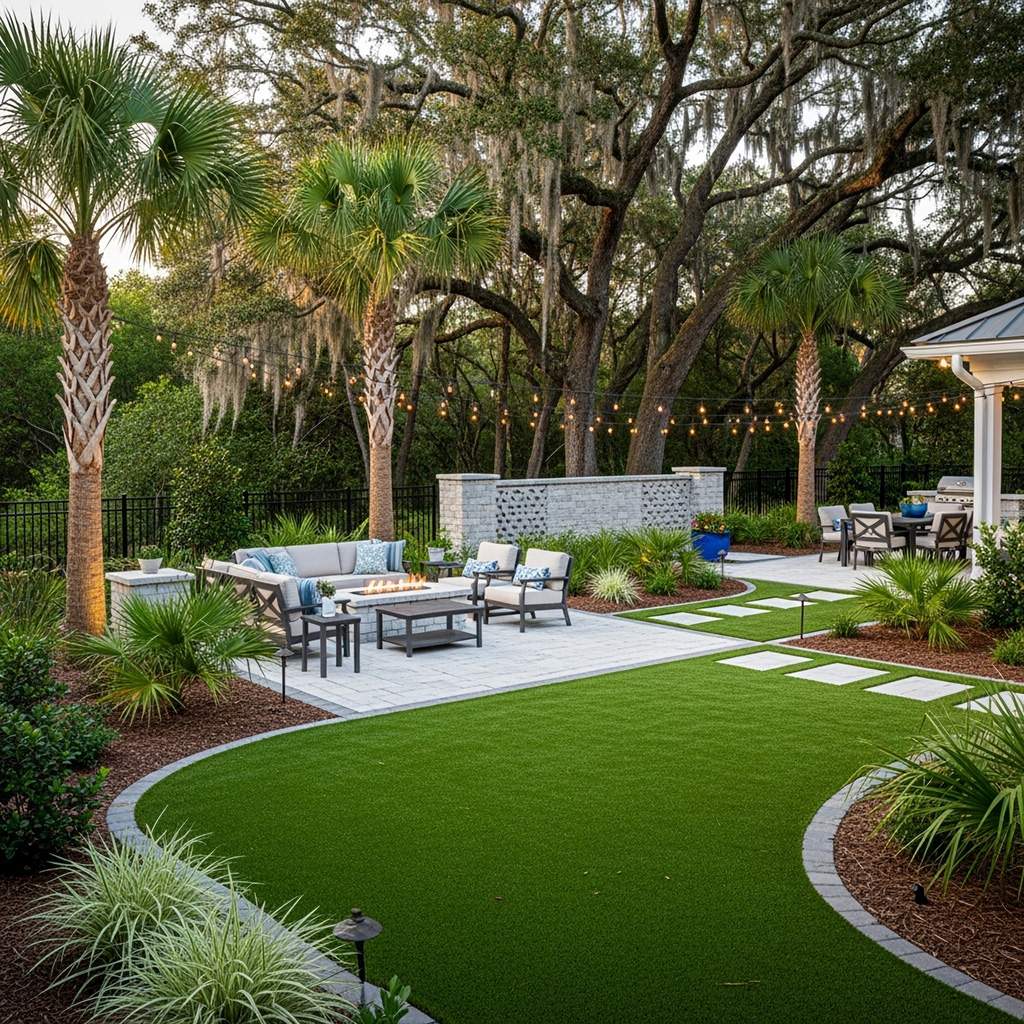
Anyone who’s tried to keep a natural lawn alive in the Lowcountry knows the struggle. Between the blazing summer sun, thick humidity, torrential downpours, and sandy, low-lying soil, Charleston’s climate is one of the hardest environments in the country for grass to thrive in. It’s a big reason artificial turf has become such a popular choice for homeowners across Charleston, Mount Pleasant, Daniel Island, James Island, Johns Island, West Ashley, Sullivan’s Island, Isle of Palms, and Folly Beach.
But not all turf is created equal, and not every product on the market is built to handle what a Lowcountry summer throws at it. Here’s what Charleston homeowners should understand about how artificial turf actually performs in extreme heat and humidity, and how to choose a product that will hold up long term.
Why Charleston’s Climate Is So Tough on Lawns
Charleston sits in a humid subtropical climate zone, which means long, hot summers, high humidity nearly year-round, and heavy seasonal rainfall, including hurricane season from June through November. Add in sandy, low-lying soil and a high water table in many neighborhoods, and you’ve got a recipe for lawns that struggle with brown patches, fungus, standing water, and erosion no matter how much time and money homeowners put into them.
Natural grass in our area needs constant irrigation, regular fertilization, frequent mowing, and near- constant pest and fungus management just to look decent, and even then, a single hot, dry stretch or a heavy storm can undo months of work. This is exactly the environment where high-quality artificial turf has a real advantage.
How Artificial Turf Performs in Extreme Heat
One of the most common questions we hear from Charleston homeowners considering turf is whether it gets too hot to use during our brutal summer months. It’s a fair concern; dark synthetic surfaces can absorb more heat than natural grass when they sit in direct, unbroken sun. The good news is that turf technology has improved significantly. Many premium turf products now use heat-reflective or IR-reflective fibers designed to reduce surface temperature, along with lighter-colored fiber blends that absorb less heat than older generations of turf. Cooling infill options, such as those designed to reflect heat rather than trap it, can also make a meaningful difference in surface
temperature on hot days.
Practical steps also help: choosing a turf product designed for hot climates, incorporating shade from trees, pergolas, or structures in high-traffic areas, and rinsing the surface with water on the hottest days can all keep a turf lawn comfortable for kids and pets in a Charleston summer.
Humidity, Rain, and Drainage in the Lowcountry
Charleston’s humidity and rainfall are just as important to plan for as the heat. A properly installed artificial turf system uses a permeable backing that allows water to drain through rather than pool on the surface, which matters enormously in a region that sees frequent, sometimes intense, summer thunderstorms.
The key word here is properly installed. Turf drainage depends heavily on what’s underneath it. A base layer of crushed stone or aggregate, graded correctly and compacted well, allows rainwater to move through the system and into the ground rather than sitting on top of your lawn. In low-lying yards common throughout West Ashley, James Island, and parts of Mount Pleasant, this base preparation is the single most important factor in whether a turf installation performs well long term.
Humidity itself isn’t a threat to quality synthetic turf fibers; unlike natural grass, turf doesn’t develop fungus or mildew simply from moisture in the air. The concern is almost always about what happens at ground level: standing water, poor drainage, or organic debris trapped underneath the turf, which is why proper installation matters so much more than the turf product itself.
Turf and Charleston’s Sandy, Marshy Soil
Much of the Charleston area sits on sandy, low-lying soil with a high water table, conditions that are notoriously difficult for both natural lawns and hardscaping projects. For artificial turf, this means site preparation needs to account for drainage and, in some cases, additional grading to direct water away from the turf system and toward appropriate drainage points on the property.
Homes on barrier islands like Sullivan’s Island, Isle of Palms, and Folly Beach, and low-lying areas of James Island and West Ashley, often need more attention to base preparation than a typical inland yard. This isn’t a reason to avoid turf in these areas, in fact, it’s often where turf makes the most sense, since it removes the constant battle of trying to grow grass in sandy, salt-exposed soil. It just means the installation needs to be done by a team that understands local ground conditions.
Turf and Mosquito Reduction
One underrated benefit of artificial turf in the Lowcountry: eliminating standing water and dense, overgrown grass reduces the habitat mosquitoes rely on to breed. While turf alone won’t solve a mosquito problem, replacing a struggling, unevenly watered lawn with a well-drained turf system removes one of several conditions mosquitoes thrive in, a welcome benefit during Charleston’s long, humid season.
Hurricane Season and Storm Resilience
Charleston’s hurricane season runs roughly June through November, and heavy rain events are simply part of life here. Quality artificial turf systems, when installed with proper drainage, handle heavy rainfall well. Unlike natural grass, turf won’t develop standing puddles of mud or bare, washed-out patches after a major storm. The turf itself is secured to the base and typically stays in place through normal storm conditions, though homeowners in flood-prone areas should still talk with their installer about site-specific drainage planning.
Choosing the Right Turf for a Charleston Yard
Not all artificial turf products are built for a climate like ours. A few things to look for:
Pile height and density. A shorter, denser pile tends to perform better in high-heat conditions and holds up well to foot traffic and pets.
UV-stabilized fibers. Charleston gets intense, near year-round sun exposure. UV-stabilized fibers resist fading and degradation far better than standard turf.
Permeable backing. This is non-negotiable in our climate. Look for turf with a fully permeable backing that supports proper drainage rather than a solid-backed product designed for drier regions.
Infill type. Depending on your use case, whether it’s a play area, a pet-friendly yard, or a putting green, the right infill (such as antimicrobial or cooling infill options) can improve both comfort and hygiene in a hot, humid climate.
Warranty and installation quality. Even the best turf product will underperform if the base and drainage aren’t installed correctly. The installer matters as much as the product.
Applications: Where Turf Makes the Most Sense in Charleston
Artificial turf is a fit for far more than just backyards. Charleston homeowners are increasingly using it for putting greens, pet areas (which eliminate the mud and muddy paw prints that come with our rainy season), play areas for kids, and even commercial and pool-adjacent spaces where a clean, consistent surface matters year-round.
Caring for Artificial Turf in a Humid Climate
One of the biggest advantages of artificial turf in Charleston is how little maintenance it requires compared to natural grass, but “low maintenance” doesn’t mean “no maintenance.” A few simple habits will keep a turf lawn looking its best through our long, humid season. Rinse the surface periodically to clear pollen, dust, and salt spray, all of which are common in our coastal air. Brush against the grain occasionally in high-traffic areas to keep fibers standing upright. For homes with pets, an antimicrobial
infill and routine rinsing help manage odor in hot, humid weather. And because Charleston’s humidity supports rapid growth of weeds and organic debris, it’s worth checking turf seams and edges a couple of times a year to make sure nothing is taking root underneath. None of this compares to the time, water, and cost that natural grass demands in our climate, but a little routine care goes a long way toward protecting your investment.
Why Work With a Local Charleston Turf Installer
Because so much of turf’s long-term performance in our climate comes down to proper base preparation and drainage, it matters who installs it. At Sweetgrass Concepts, we’ve installed artificial turf throughout Charleston, Mount Pleasant, Daniel Island, Sullivan’s Island, Isle of Palms, West Ashley, James Island, Johns Island, and Folly Beach, and we build every installation with the Lowcountry’s heat, humidity, and drainage challenges in mind. Our owner is on-site for every job, we offer free estimates, and all of our hardscaping and turf work is backed by a one-year warranty.
Frequently Asked Questions
Does artificial turf get too hot to walk on in Charleston summers?
Turf can get warmer than natural grass in direct sun, but heat-reflective fibers, lighter color blends, and cooling infill options significantly reduce surface temperature. Shade and occasional rinsing also help on the hottest days.
Will humidity cause artificial turf to mold or mildew?
The turf fibers themselves don’t grow mold from humidity, but poor drainage underneath the turf can lead to issues. Proper installation with a permeable base is the key to avoiding this.
Can artificial turf handle Charleston’s heavy rain and hurricane season?
Yes, when installed with a properly graded, permeable base. Turf drains well and won’t develop the mud or bare patches that come with heavy rain on natural grass.
Is artificial turf a good option for sandy or low-lying yards?
Yes, and it’s often a better long-term solution than natural grass in these conditions, as long as the installer accounts for drainage and grading during installation.
Get a Free Artificial Turf Estimate in Charleston, SC
If you’re tired of fighting Charleston’s heat, humidity, and soil just to keep a lawn alive, Sweetgrass Concepts can help you explore whether artificial turf is the right fit for your property. Call (843) 609-4909 or reach out online for a free, no-obligation estimate.