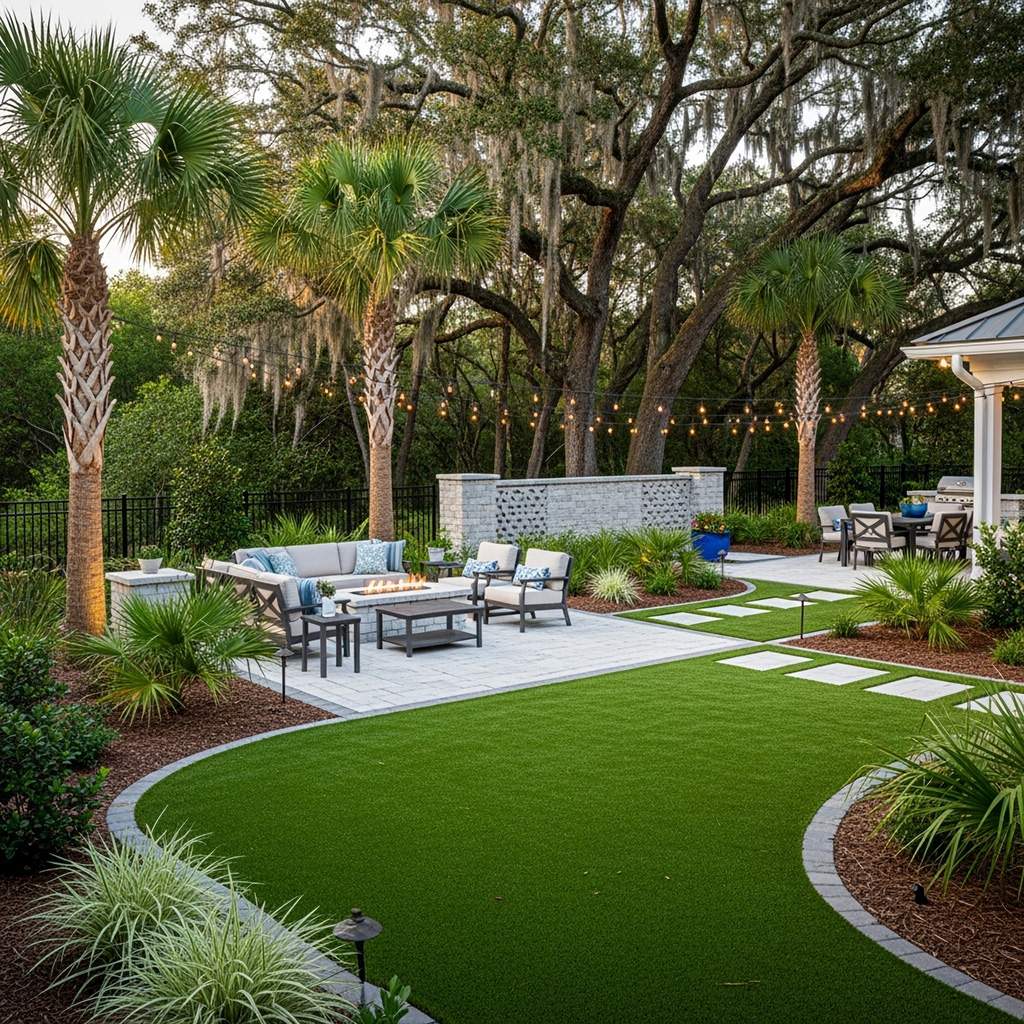
A beautiful lawn sets the stage for your entire outdoor space. It ties your home together, adds curb appeal, and gives you a place to relax and entertain. But in Charleston’s coastal climate, keeping that picture-perfect yard takes serious effort. Between the heat, humidity, and salt in the air, even the best-kept lawns can struggle to stay green year-round.
That’s why many homeowners in the Lowcountry have started exploring artificial turf as an alternative. It offers the same clean, vibrant look of grass—without the constant upkeep. Still, both options have their strengths, and the right choice depends on how you use your space.
Table of Contents
Maintenance and Upkeep
Natural grass is alive, and that means it needs regular attention. Between mowing, watering, fertilizing, and managing weeds or pests, a lawn can easily become a full-time commitment. For many Charleston homeowners, the combination of sandy soil and inconsistent rainfall makes it even harder to keep things healthy.
Artificial turf, on the other hand, eliminates most of that work. It doesn’t need mowing, watering, or fertilizer. A quick rinse and the occasional brushing are all it takes to keep it looking fresh. There are no muddy spots after storms, and the lawn stays consistently green no matter the weather.
For homeowners who want to enjoy their outdoor space without dedicating every weekend to maintenance, turf can be a practical way to simplify things.
Durability in a Coastal Climate
Charleston’s weather is unpredictable—sun one day, heavy rain the next. Natural grass often struggles with flooding, erosion, and salt exposure, especially in yards near the water. Shade from trees and moisture from the coast can also lead to mold and thinning patches.
Artificial turf holds up better in those conditions. It’s built with advanced drainage layers that move water away quickly, so it dries fast after storms. The material resists fading in the sun and stays even through heavy use from pets, kids, and backyard gatherings. Turf doesn’t wear down easily, which makes it a reliable option for high-traffic areas where grass would normally die off.
Cost and Long-Term Value
Installing artificial turf costs more upfront than laying sod, usually between $8–$15 per square foot, depending on the base preparation and turf style. A natural lawn might cost less initially, but the ongoing expenses add up fast—mowing, irrigation, fertilizer, and general upkeep.
Over several years, turf often balances out those costs. It also saves time, which is something many homeowners value just as much as money. Once installed, turf keeps its appearance for 15 to 20 years with very little effort, while grass typically needs replanting or repair every few seasons.
For homeowners planning to stay in their home long-term, turf can quietly pay for itself in reduced maintenance and consistent results.
Look and Feel
Natural grass has its appeal. It cools the yard on hot days, has that classic “fresh cut” scent, and provides a soft surface underfoot. For some, that living, organic feel is hard to replace.
Still, turf has come a long way. Modern products use realistic color blends, soft fibers, and infills that make it nearly indistinguishable from real grass. It looks uniform, stays the same height, and stays green year-round. Around pools, patios, and shaded areas where grass struggles, turf often looks better and performs more consistently.
It’s not about replacing the natural look—it’s about keeping that same beauty without the constant work.
Environmental Considerations
Every option has trade-offs. Natural grass supports soil health and absorbs carbon, but it also requires significant water and chemical inputs. During Charleston’s hot summers, irrigation systems can run daily just to keep lawns alive.
Artificial turf eliminates watering and fertilizer use completely. It’s made from synthetic materials, but modern turf systems often include recycled components and infills made from plant-based or natural materials. For eco-conscious homeowners, it’s a question of balance: saving water and avoiding chemicals versus maintaining a living surface.
Either way, choosing high-quality materials and responsible installation makes a big difference.
Families, Pets, and Everyday Use
Families with kids or pets often see turf as a functional upgrade. It stays clean, even, and safe for play. There are no muddy paws, no bare patches from traffic, and no fertilizers to worry about. Turf designed for pets drains quickly and can be rinsed easily, keeping the yard odor-free.
Natural grass can still work well for families who enjoy gardening and don’t mind a bit of maintenance. But for those who want an outdoor space that’s always ready to use, turf tends to win on convenience.
Curb Appeal and Value
Curb appeal is one of the biggest advantages of turf. It gives your property a polished, well-kept look that lasts all year. It pairs beautifully with patios, pavers, and pool decks, keeping the whole landscape cohesive and low-maintenance.
While turf won’t drastically increase home value on its own, buyers often see it as a plus. A clean, maintenance-free lawn can help a home stand out—especially in Charleston, where outdoor living is such a big part of daily life.
Finding What Fits Your Lifestyle
In the end, both options have their place.
If you enjoy gardening, love the smell of fresh-cut grass, and don’t mind regular maintenance, natural sod is still a classic choice.
If you’d rather spend more time enjoying your yard than maintaining it, artificial turf is worth serious consideration. It’s dependable, attractive, and designed to handle Charleston’s coastal environment without all the work.
Many homeowners even blend the two—using turf around patios and shaded areas, and keeping natural grass in open spaces. It’s all about what feels right for your lifestyle.
Bring Your Yard to Life with Sweetgrass Concepts
A well-planned lawn—natural or artificial—can completely transform your outdoor space. If you’re interested in exploring turf installation for your home, contact Sweetgrass Concepts
for a custom consultation. The team can help you compare options, choose the right materials, and design a space that looks great and lasts for years.